Monday, 30 May 2016

Coco Barclay and Co

The Coco Barclay store in Greenwich not only stocks our handbags and leather goods but other designers and brands that are based in and around London, ensuring the shop stays true to it's local roots.
Gabriella Sellors is a designer, jeweller and member of the Surrey Guild of Craftsmen. She designs and makes beautiful pieces, combining a wide variety of coloured freshwater pearls and semiprecious stones with sterling silver, 9 and 18 carat gold. Her techniques and attention to detail ensure each piece is unique, even when following a previous design.


Another designer we stock in the shop in Suzie Lee, a knitwear company based in Kent designing and producing accessories and a collection of home wear from their farm cottage studio in the countryside.
Suzie Lee is about celebrating knitwear traditions in a contemporary way.
By using the softest natural fibers, the knitwear feels
comfortable against the skin and breathes but still keeps you warm.
Suzie embraces colour blocking and Fair Isle patterns from her Scottish roots to create unique items to be treasured for years. Each item has its own personality, with many colour variations to suit your individual style.


Amelie-London set up her own business selling pre-loved and designer clothing after gaining experience working for an independent clothing boutique. She sells from market stalls, shops including Coco Barclay and online. She also has experience of styling for a fashion designer and loves piecing together outfits.

viCeramics are based in London and make beautiful handmade ceramics including kitchenware, plant holders and vases. Using a potters wheel each product is finished with their own unique glaze giving it that one of a kind look. Great gifts with an artfully crafted feel.


KatsKalma make gorgeous handmade soaps, bath bombs, candles-everything you need for that special, relaxing time alone (or maybe with that lovely lucky one!) They are very passionate about what they do and are constantly looking, testing and mixing new scents, ingredients, products etc so you get only the best there is! All their products are assessed for safety and certified by EU legislation, also “human” tested (on very happy volunteers of course!), and are suitable for even most sensitive skins!


This is just a few of the wonderful brands we stock and we are allways on the look out for new talent! Pop by the shop in Greenwich to see more.
Coco
X

Friday, 13 May 2016

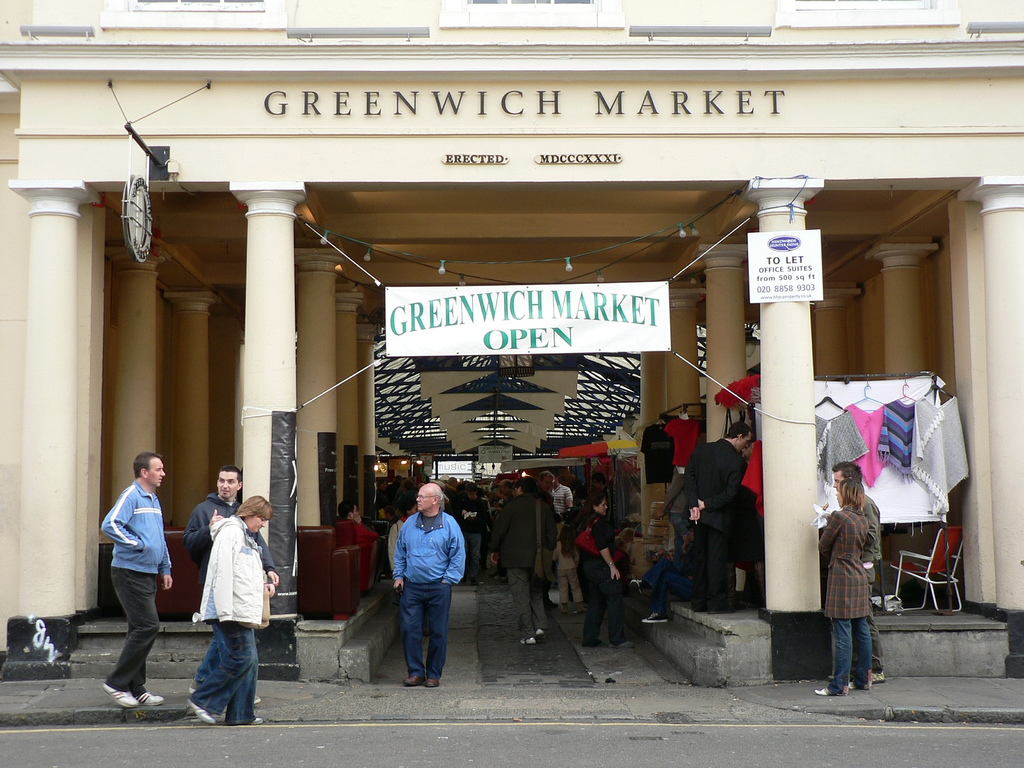
Greenwich Market

The brand Coco Barclay has strong links with the Royal London borough of Greenwich. Not only is it home to the Coco Barclay shop but also our studio where all new collections are designed, sampled and made. This corner still looks much the same today.  I hope I'm right in saying the Admiral Hardy Pub now takes up the space. I love this picture.

Royal Greenwich has a rich history and is home to many of London's great landmarks such as the Cutty Sark and the Royal Observatory but possibly the most known of all, Greenwich Market. It is popular for
 delicious food and antiques and designer makers,
it has everything to awaken your senses. 
Coco Barclay began its brand journey here. Trading on the market for over 10 years building up the company and growing a loyal customer base.
From the 14th century, Greenwich had a market, originally trading on Wednesdays and Saturdays. The present site dates from 1700, when a charter was assigned to the commissioners for Greenwich Hospital for 1000 years!

The original market sold meats, vegetables, eggs and other fresh food. It also was home to peddlers selling goods such as china, glass and earthenware. 


In 1845 the licensee of the Admiral Hardy pub was given permission to convert the large room over the newly built arch in the market into a small theatre with a tiered balcony. The inscription on the arch still reads:
“A false balance is an abomination to the Lord but a just weight is his delight” 


To this day the market is extremely popular with a different market nearly everyday

Antiques on Tuesdays, Thursdays and Fridays and craft and design on Wednesday, Friday, Saturday and Sunday with food everyday!


We love it when people pop into the shop for some retail therapy, having satisfied their cultural needs  first, of course! We get great reviews of all the exhibitions and events taking place from our visitors, and love recommending  exciting things we know about as locals!


 x Coco


Sunday, 1 May 2016

The History of the Handbag

Our brand Coco Barclay makes leather accessories and most importantly handbags. Every woman has a handbag of some shape or form. We love to create original designs that are beautiful and practical for the modern day woman.


Design collaboration with the Japanese accessory chain, Ear Papillonner and Coco Barclay, the Silk Tie Rucksack
We like to add a bit of history to our bags to make them special, whether it be a vintage component or a one of a kind vintage fabric. The handbag itself has such a rich history.

References to what we now call handbags started appearing in the early 1900s. At first the term referred to men's hand-luggage. Women's bags grew larger and more complex during this period, and the term hand luggage was then attached to the women's accessory.
1900s coin purse.
The word handbag became a verb during Margaret Thatcher's time, as she was known for always carrying one and pulling notes written on paper out of it! We're not sure if people wanted to get "handbagged" or not!
From the ancient beaded bags of Africa to the tote of the modern woman, handbags have historically been both the holders of secrets and the signifiers of power, status, and beauty.
Early Europeans wore purses for only one purpose, to carry coins. Purses were made of soft fabric or leather and were worn by men as often as ladies. The Scottish sporran is a survival of this custom. In the 17th century, young girls were taught embroidery as a necessary skill for marriage, this also helped them make very beautiful handbags.
Scottish sporran
 By the late 18th century, fashion in Europe was moving towards a slender shape for these accessories, inspired by the silhouettes of Ancient Greece and Rome. Women wanted purses that would not be bulky or untidy in appearance.
The modern purse, clutch, pouch or handbag came about in England during the Industrial Revolution, due to the increase in travel by railway. In 1841 the Doncaster industrialist and confectionery entrepreneur Samuel Parkinson ordered a set of travel cases and insisted on a travelling case or bag for his wife's particulars after noticing that her purse was too small. He had them made in leather to match his own luggage and leather was used in order to distinguish them from others, who mostly carried bags made from carpet (carpetbags).
In the 20th century, art and fashion movements came and went in and the handbag evolved along with them. 
Branding became increasingly important during the 20th century and the great handbag designers emerged. Designers known all over the world for their exclusive handbags and leather ware include Hermès, Louis Vuitton, Gucci and Prada. Bags began to change in style from season to season.
Coco Barclay Glovie frame bag

Did you know the Queen's favourite handbag brand is British designer Launer.
Here at Coco Barclay we feel privileged to design these special accessories.


Coco
X

Friday, 15 April 2016

The history of the thimble

At Coco Barclay we love to use products that have an interesting past.

The thimble has great history, we use it in many different ways, especially the cloisonné thimble.

The thimble is a small pitted cup worn on the finger to protect when sewing and aids pushing a needle through when sewing.

The Old English word þȳmel, the ancestor of thimble, is derived from Old English þūma, the ancestor of our word thumb.


The earliest known thimble which was a simple ring dates back to the Han Dynasty ancient China and was discovered during the Cultural Revolution of the People's Republic of China in a dignitary's tomb.  Thimbles dating back to the 10th century have been found in England, and thimbles were in widespread use there by the 14th century.


There are some examples of thimbles made of precious metals, Elizabeth I is said to have given one of her ladies-in-waiting a thimble set with precious stones, most metal thimbles were made of brass. Medieval thimbles were either cast brass or made from hammered sheet and bone or horn.

18th Century keepsake thimble

In 1693, a Dutch thimble manufacturer named John Lofting established a thimble manufacturer in Islington, expanding British thimble production to new heights. He later moved his mill to Buckinghamshire to take advantage of water-powered production, resulting in a capacity to produce more than two million thimbles per year!

By the end of the 18th century, thimble making had moved to Birmingham, and shifted to the "deep drawing" method of manufacture, which alternated hammering of sheet metals with annealing, and produced a thinner-skinned thimble with a taller shape. At the same time, cheaper sources of silver from the Americas made silver thimbles a popular item for the first time.


Cast 14th Century thimble


Originally, thimbles were used solely for pushing a needle through fabric or leather as it was being sewn. Since then however, they have gained many other uses. From the 16th century onwards silver thimbles were regarded as an ideal gift for ladies, and of course to make a Coco Barclay bag look special and beautiful!


Early American thimbles made of whale bone or tooth featuring miniature scrimshaw designs are considered valuable collectibles. Such rare thimbles are prominently featured in a number of New England Whaling Museums.

During the First World War, silver thimbles were collected from "those who had nothing to give" by the British government and melted down to buy hospital equipment.


A 9-foot high sculpture of a giant thimble resting on a stack of buttons, commemorating the garment district in Toronto!

We love to use Cloisonné thimbles.


We use the thimble on bag fastenings and leather tassel key rings making the product one of a kind as no two vintage thimbles are the same.

Pop into the Coco Barclay shop in Greenwich, London to see for yourself!


Coco
 x


Wednesday, 6 April 2016

As good as New

Once you've got your new Coco Barclay handbag or accessory home of course you will want to look after it.

Leather naturally softens and wears with age which makes the product look even more beautiful and creates great character. We use a lot of glazed leather which has a soft shine due to the finish of natural wax. Some customers like their leather with the wax rubbed off, leaving more of a matt finish. But if you want to keep that shine, you will need to re-wax the bag from time to time. We prefer to use any hard, clear wax. Rub it in with a cloth, wait 20 minutes, then buff thoroughly with  any soft fabric. It also helps keep dirt away and repels moisture. Good leather products should last a lifetime and  even be passed on to the next generation!


To keep leather in the best condition we recommend using a leather protector. We use the US based brand Fiebing's, who are experts and this year will be celebrating their 120th birthday! Here at Coco Barclay we wonder if the reason they are so successful in America is all of the wide open space, where horses and saddles are big business! Also, it seems like quite a coincidence that Fiebings are based in Milwaukee, where Harley Davidson is also from (and me, as it happens). Fiebings are probably the choice for Harley owners everywhere, to keep their motorcycle seats and protective wear in gleaming condition! The law in Wisconsin states you don't have to wear a helmet, but you do need to look your best!

Fiebing's sell on line here http://www.fiebing.com/ or in retailers across the world.


We use many of their products, including their saddle soap. Just mix with a little water and rub over the leather. It makes the leather look as good as new without taking away any of its 'sparkle'. Another good product is their saddle oil which makes leather shine and restores the moisture. 
Next time you purchase a Coco Barclay leather good just ask us about the leather and we will be able to tell you were it comes from and how it was processed, more on that later.
For information on looking after your Coco Barclay just drop us an email at info@cocobarclay.com and we are happy to answer any questions.
Coco
x

Monday, 29 February 2016

The Coco Barclay home

The Coco Barclay brand was born in the Royal London borough of Greenwich, with its rich history, baroque architecture and buzzing atmosphere makes it the perfect place to be inspired.

Greenwich is famous for its maritime history which often inspires Coco Barclay designs. Greenwich houses many famous landmarks such as the National Maritime Museum, Royal Hospital School and the Greenwich Meridian which tells us what we cannot live without....the time!

The most famous of all the Greenwich riches is the Cutty Sark, built in 1869 for the Jock Willis shipping line and used for the tea trade. Shes had a tough life though, being damaged by fire twice in recent years, first on 21 May 2007 while undergoing conservation. She was restored and reopened to the public on 25 April 2012 but on 19 October 2014 she was damaged again, nevertheless she is still in Greenwich being marveled at by many a tourist!


There is so much rich heritage in Greenwich and the best way to find out more is to come and visit! Whether a rainy day to explore the museums along with fantastic shopping or a summers day for walking in the park and exploring the market.


Not only the Coco Barclay studio, but also the Coco Barclay shop is situated in Greenwich, just outside Greenwich Markets main entrance, 4 College Approach, Greenwich, Greater London SE10 9HZ.


Looking forward to seeing you there!
Coco
x